We’ve just posted some information on our discussion forum about Codebook 2 no longer running on iOS 14.5. If you’re unable to access your data we’ve got migration steps available.
Codebook 2 for iOS 14.5 Migration Help
SQLCipher 4.4.3 Release
We are pleased to announce that SQLCipher 4.4.3 is now available. It includes the following important changes:
SQLCipher Core
- Updates baseline to use SQLite SQLite 3.34.1
- Fixes bug in
sqlcipher_export()handling of NULL parameters - Removes randomization from several tests to avoid spurious failures
- Changes internal usage of
sqlite_mastertosqlite_schema - Omits unusued profiling function under certain defines to avoid compiler warnings
SQLCipher Commercial and Enterprise
The following changes and enhancements are available for Commercial and Enterprise packages:
- Improves SQLCipher for iOS to include static libraries packaged in an
.xcframeworksupporting Simulator on Apple Silicon - Updates packaging for SQLCipher for iOS to use a notarized DMG to avoid security warnings on Big Sur
- Increases minimum supported Java version for the SQLCipher JDBC package to Java 8
- non-FIPS packages using OpenSSL now include the latest release of 1.1.1j
Availability
Commercial and Enterprise - On-demand access to new releases of SQLCipher packages are available to all licensees with an active support subscription from the Customer Downloads fulfillment site. Licensees will also receive a separate email notification regarding the update and can contact us at any time for private support directly from the SQLCipher development team.
Community Edition - SQLCipher Community Edition source code is available on GitHub, via AAR packaging for Android, and CocoaPods for iOS.
Codebook Development Notes, Dec 2020
We’ve got another Codebook development update post available for the month, this time over on the discussion forum, in case anybody wants to leave feedback directly. Like the last one in November, it has news about our current efforts, what we’ll be working on next, and how we’ve been responding to feedback and bug reports. We have a few point release updates on the way, but we’ll be holding off until after the holidays so we can provide proper customer support should anything arise.
Happy holidays from all of us here at Zetetic!
Codebook 4.3.0 Released for Android, macOS, and Windows
Today we released Codebook 4.3.0 with support for AutoFill on Android and macOS Big Sur, along with several other improvements and bug fixes for Windows. Please read on for highlights; download links and version requirements are available here:
https://www.zetetic.net/codebook/documentation/requirements/
Autofill for Android
Codebook for Android version 4.3.0 includes a new Autofill feature allowing you to seamlessly fill in your passwords and other other data into login forms in other apps and websites.
macOS Big Sur and Password AutoFill
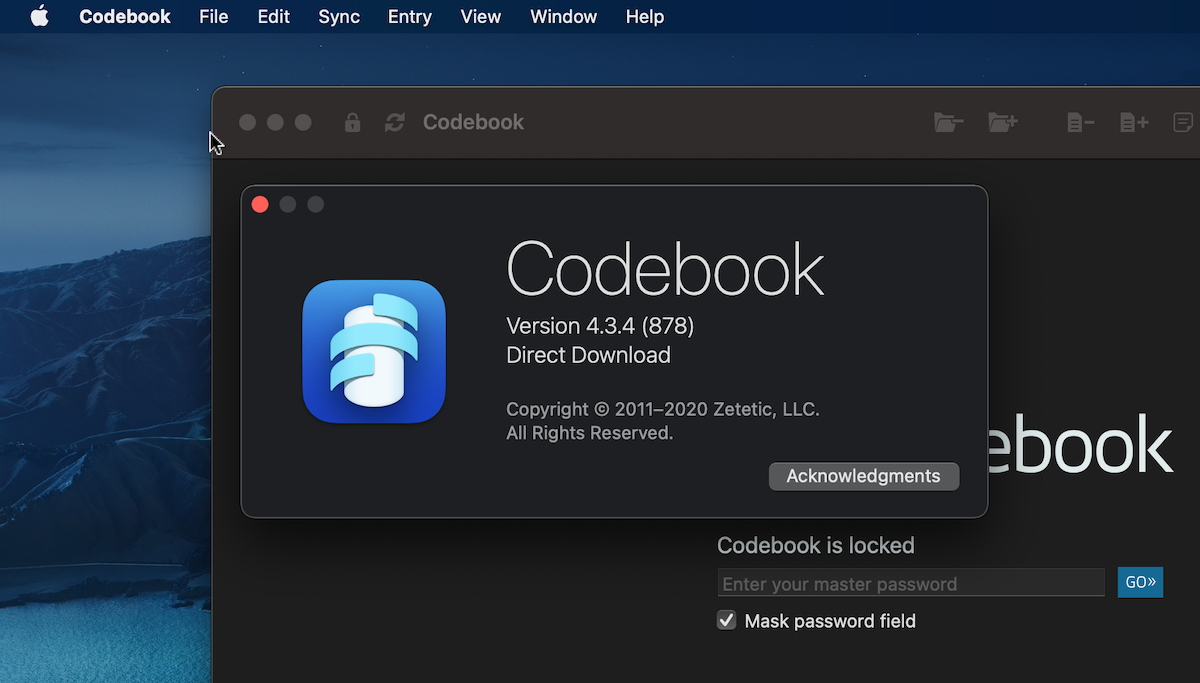
Codebook for macOS 4.3.0 is ready to go on macOS Big Sur 11! Mostly we needed to adopt the new Big Sur UI for the application windows, and update our app icon. However, we were also able to take advantage of the new Password AutoFill support in macOS Big Sur!
Update: There’s a bug in 4.3.0 for macOS, Codebook’s Password AutoFill extension isn’t showing up in System Preferences > Extensions, making the feature unavailable. This affects both the Direct and Mac App Store versions. Version 4.3.1 is on the way with a fix right now, our apologies!
Other things to note about this update for macOS:
- The new minimum version of macOS that Codebook supports is 10.12 (previously it was 10.10). If you can’t upgrade right now, that’s okay, the new version doesn’t break compatibility for sync with previous versions.
- ⚠️ The encrypted database location in your Home folder has changed! Please update any scripts or backup jobs that use the old location.
The new database location path for macOS is (all one line):
~/Library/Group Containers/PD7G6HRMGV.net.zetetic.STRIP/Strip/default.strip/strip.db
Codebook for Windows
Codebook for Windows 4.3.0 provides several minor feature updates and bug fixes, including:
- Adds a new Exclude Characters feature on the Password Generator
- Password Weakness Warnings are displayed when setting a Master Password
- Adds a new License Key window for easier access within the application
What About iOS?
Update: Since a few people have (quite reasonably) already asked: Codebook for iOS 4.3 with support for iOS 14 is already available, visit this page in the App Store using your device to get the latest version. We released 4.3.0 in early September and followed that up with 4.3.1, which adds support for the latest iPhone and iPad screen sizes.
Need Help?
As always, please feel to reach out to us at support@zetetic.net. You can also provide feedback and ask questions on our community discussion forum.
SQLCipher 4.4.2 Release
We are pleased to announce that SQLCipher 4.4.2 is now available. It includes the following important changes:
SQLCipher Core
- Improved error handling to resolve potential corruption if an encryption operation failed while operating in WAL mode
- Changes to OpenSSL library cryptographic provider to reduce initialization complexity
- Adjusts PRAGMA cipher_integrity_check to skip locking page to avoid a spurious error report for very large databases
SQLCipher Commercial and Enterprise
The following changes and enhancements are available for Commercial and Enterprise packages:
- non-FIPS macOS, iOS, and Mac Catalyst packages have been updated to support build and execution on new Apple Silicon (arm64) devices
- the minimum SDK for macOS packages using a FIPS 140-2 validated cryptographic module is now 10.9 to enable signing and notarization
- all packages now enable the DBSTAT Virtual Table to expose useful information about databases for analysis
Availability
Commercial and Enterprise - On-demand access to new releases of SQLCipher packages are available to all licensees with an active support subscription from the Customer Downloads fulfillment site. Licensees will also receive a separate email notification regarding the update and can contact us at any time for private support directly from the SQLCipher development team.
Community Edition - SQLCipher Community Edition source code is available on GitHub, via AAR packaging for Android, and CocoaPods for iOS.